
An export market saturated with imported goods
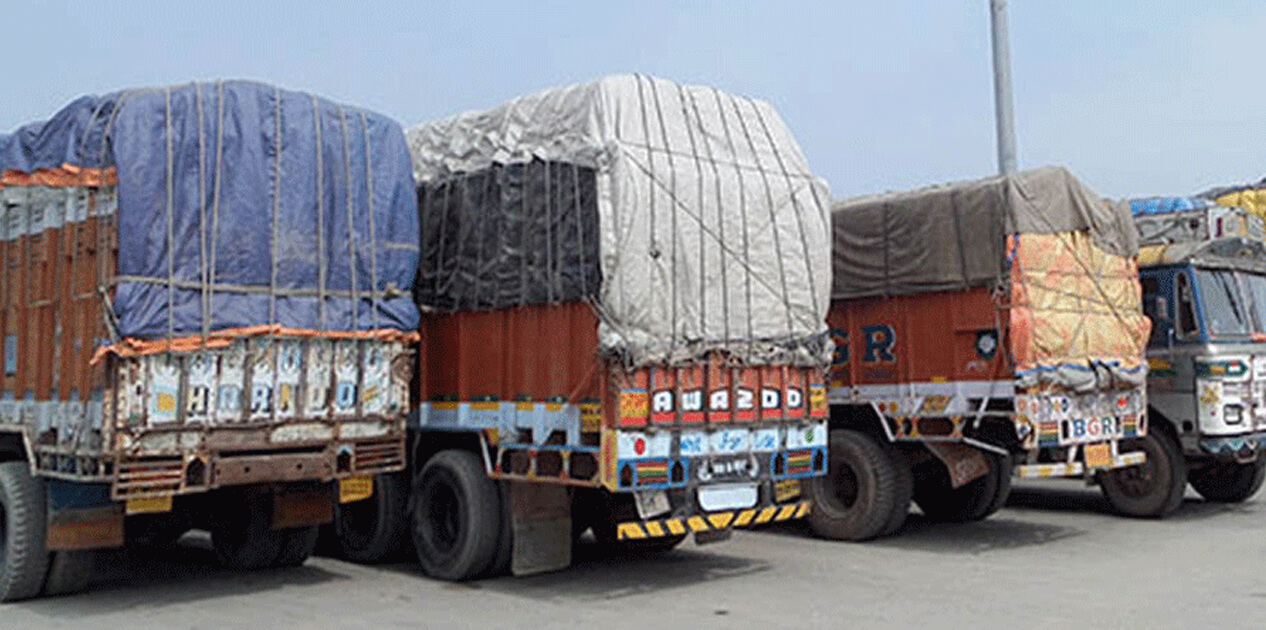
Recently, it seems that there is a change in the structure of goods exported from Nepal. Until recently, the main items exported from Nepal were woolen carpets, pashmina, jute and jute goods, ready-made garments etc.
However, if we look at the statistics of the last financial years, the structure of Nepal’s export trade has changed. Currently, the most exported items from Nepal are palm and soybean refined oil. The raw materials of these items are imported by paying dollars. Then, general processing takes place in the country and packaging is then exported to India. Nepalese businessmen have taken advantage of the special facilities provided by the World Trade Organization, South Asian Free Trade Area (SAFTA) and India by exporting these goods.
Indian and Nepali businessmen have joined in this work, they are reaping the benefits. The country is basking in export figures boosted by temporary commodities such as palm (tadi) oil and soybean oil.
According to the data of the financial year 2079/80, processed palm oil has been exported the most from Nepal. Palm oil accounts for 13 percent of total exports. Soybean oil, the fifth most exported commodity, accounts for 5.5 percent of total exports. The fact is that domestically produced raw materials of palm oil cannot meet the domestic demand of Nepal. Export has become a different matter.
According to the data of the National Bank, in the last financial year 079-80, goods worth 1 trillion 57 billion 14 crores were exported from Nepal to various countries. Refined palm oil ranks first among the total exports. Last year, only palm oil worth 20 billion 500 million 91 million was exported. Which accounts for about 13 percent of total exports. Palm oil has been among the most exported commodities in three out of the last five years. Soybean oil is the fifth most exported commodity. Last year only soybean oil worth 8.47 billion was exported. This is 5.4 percent of the export share. Similarly, about 44 million 18 million worth of sunflower oil was exported. Sunflower, palm and soybean oil accounted for more than 35 percent of the total exports in the year 078-79. Last year, this contribution decreased to about 20 percent. However, these items continue to dominate.
Domestic production of products such as palm oil, soybean oil and sunflower oil, which play a major role in the country’s export trade, is not enough in Nepal. Nepal itself rarely produces the raw material of palm oil. Although palm (tadi) is planted in some districts of the eastern Terai, its use is very low. Those substances are consumed in the local market. Soybean is a cash crop grown throughout the country. However, soybean cultivation is not practiced commercially.
The data also confirms that there is no significant value addition (value addition) to the state through the export of palm oil. According to the customs department, there is a trade deficit in both these items in the last 7 years.
According to the Customs Department, in the year 078-79, about 2 billion worth of goods were exported from Nepal, which decreased by 43 billion last year to 1 trillion 57 billion. Likewise, it has been seen that there has been an adverse effect on the revenue of the country. The main reason for this is the imbalance in the export of refined oil. It has indicated that its effect will be seen in the coming year as well.
A study conducted by the Confederation of Banks and Financial Institutions Nepal (CIBIFIN) and the Federation of Nepal Exporters’ Association has shown that Nepal will immediately benefit from the export of handicrafts from vegetable fibers such as aloe, cardamom, incense sticks, felt, ginger, herbs, handicrafts, yarn and textiles, coriander and turmeric and gundri-doko. It has shown the possibility of increasing the export of 1 trillion 96 billion rupees. While the world’s import of these 10 items is 600 billion, the world market has not used 70 billion.
Recently, the encouraging export of goods such as cardamom, chucho, cement, electricity produced in Nepal has shown some rays of hope. It seems that only if the production and productivity are increased by promoting the industries based on raw materials produced in Nepal, the export trade of Nepal will be stable and the expected benefits can be taken from it.
Comments